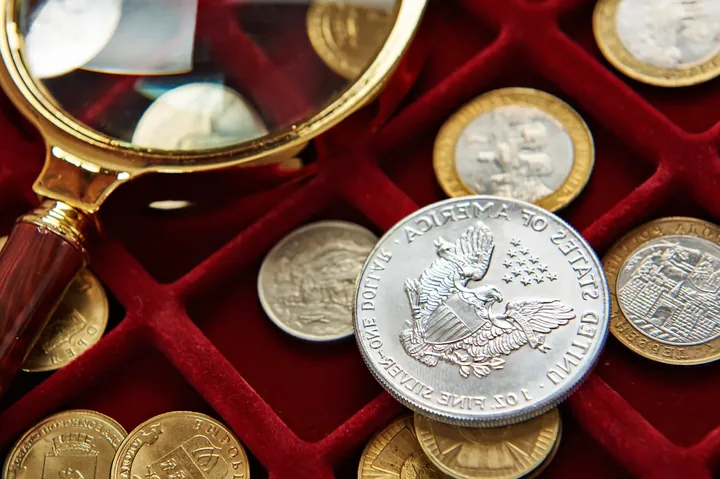
Stamps first
Most gold jewelry is stamped with its karat: 10K, 14K, 18K, or the European marks 417, 585 and 750. Stamps get faked, worn and misapplied, so we confirm every one. Plated and gold-filled pieces carry marks too, like GF, GP or HGE.
Testing tools
What we use and why.
- A magnet to catch steel and other base metals
- An electronic tester that reads karat without damage
- Acid on a touchstone for a second opinion
- A loupe to look for plating wear and solder
- A certified scale that reads in grams
Coins and bars
Gold coins and bars are made to exact specifications. We compare weight, diameter and thickness to the official numbers and run a non-destructive test on the metal. A counterfeit usually fails at least one of those checks.
From test to price
Once the karat and weight are known, the math is simple. Grams times purity gives pure gold. Pure gold times the live price gives melt value. Our offer is a set percentage of that melt value, printed on the sheet.
Will testing damage my jewelry?
No. Electronic testing leaves no mark, and acid testing uses a tiny rub on a stone, not the piece itself.
Why weigh in grams?
Grams are precise and are the unit the gold price math uses most easily.
Selling? See Gold jewelry and scrap.